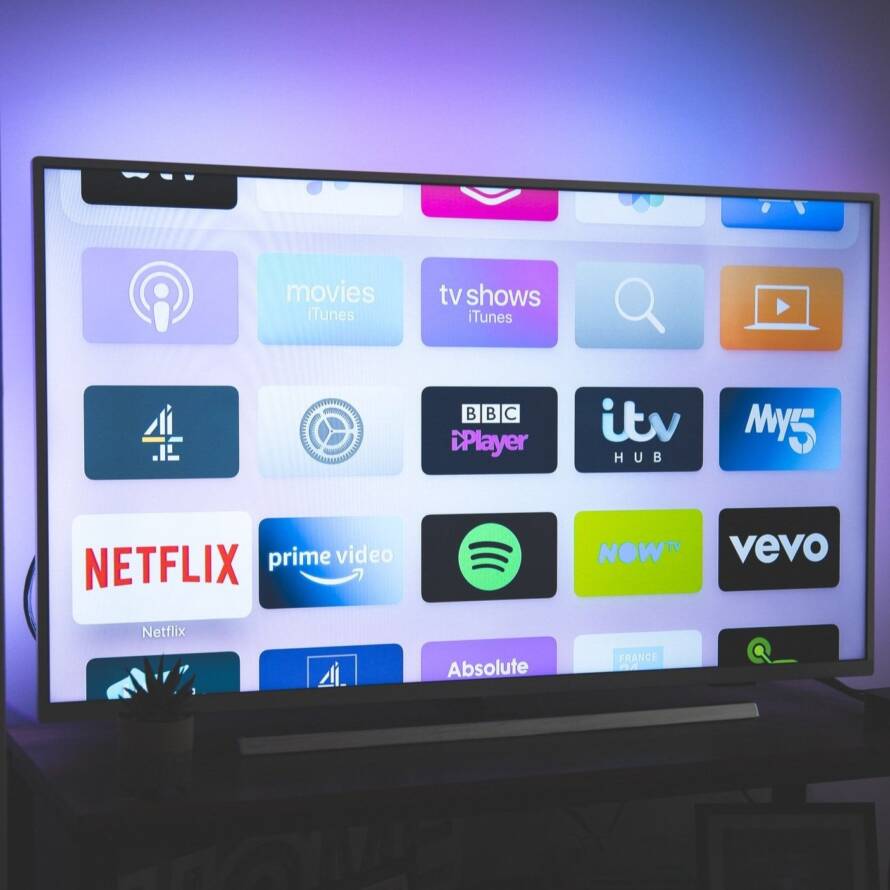
For years, YouTube was framed as the scrappy alternative to television, creator-led, mobile-first and culturally chaotic. Today, that narrative is becoming increasingly outdated. As YouTube’s presence in the living room accelerates, it is evolving from “social video” into something far closer to a fully-fledged broadcaster, one powered by algorithms, fuelled by creators and now optimised for connected TV (CTV).
The implications and opportunities for brands are significant.
The changing nature of content
The content itself has evolved. What began as bedroom vlogs has matured into longer-form, professionally produced programming. High production values, episodic storytelling and studio-quality sets are increasingly common. Google has quietly prepared for this shift, updating the YouTube TV app layout to surface comments and descriptions alongside video content and introducing episodic format options for creators. The product evolution signals intent: YouTube is architecting itself for the living room.
While YouTube on CTV is growing rapidly, mobile remains its cultural engine room. Trends are born on mobile before migrating to the biggest screen in the house. Google isn’t just acknowledging dual screening behaviour, it is actively planning for it. Viewers can like, comment, share and subscribe via mobile, the content they’re watching on TV. The ecosystem is designed to connect the two experiences seamlessly.
For brands, the opportunity lies in bridging these touchpoints — building awareness on CTV while driving interaction, subscription and community on mobile.
Broadcasters are leaning in and creators are breaking out
Traditional broadcasters have recognised the gravitational pull. The likes of the BBC, ITV and Channel 4 are investing more heavily in their YouTube presence. For the first time the BBC will now produce tailor made content for YouTube. The direction of travel is clear, YouTube is no longer on the peripheral, it is core strategy.
At the same time, creators are no longer simply influencers. They are entrepreneurs, IP owners and media businesses in their own right.
MrBeast is emblematic. His show Beast Games became an instant success on Amazon Prime Video, attracting tens of millions of viewers in its first weeks to be Amazon’s most-watched unscripted series at launch. Notably, it was not initially available on YouTube, underlining how blurred the lines have become between creator IP and mainstream streaming platforms.
Jake Paul has crossed into professional boxing, generating purses that rival and, in some cases, surpass experienced heavyweights. This has simultaneously annoyed traditional boxing fans whilst potentially introducing millions of new ones. IShowSpeed has parlayed his audience into global sports visibility, appearing at the AFCON 2026 final as well as appearing in major brand campaign for Oakley during the Superbowl half time ad break. These are not teenagers filming from their bedrooms; they are vertically integrated media brands with diversified revenue streams.
The strategic question for broadcasters and advertisers is: will the future of commissioning involve developing formats, or backing creators who already command global audiences?
The breadth of YouTube’s content ecosystem is staggering. From live coverage of the Oscars and NFL games to cultural milestones like royal weddings, YouTube increasingly mirrors the scope of traditional broadcasters but without their distribution constraints.
Commercial freedoms tempered by persistent challenges
From an advertising perspective, YouTube on CTV presents structural advantages. Ads do not require pre-approval by Clearcast in the way linear TV spots on ITV or Channel 4 do. While ads remain subject to regulation from bodies such as the Advertising Standards Authority and Google’s own policies, the reduced friction significantly accelerates campaign launch timelines.
At the same time, the platform’s user generated content DNA presents persistent challenges. Brand safety remains a live issue. Ever changing and tightening demonetisation policies frustrate its content creators and recommendation algorithms continue to attract scrutiny. YouTube is also currently a co-defendant alongside Meta in a US legal case examining social media addiction and platform responsibility. This is a reminder that scale and influence bring accountability for these platforms that cannot be ignored or sidelined.
Furthermore, the rise of AI-generated “slop” content further complicates the environment. Low-quality, mass-produced uploads risk diluting inventory quality, while radicalisation and conspiracy theory content remain difficult to police at scale. For brands, this reinforces the importance of curation over blind scale.
The proliferation of host-read sponsorships and in-video integrations also signals a shift. In many cases, creator partnerships are outperforming traditional pre-roll in terms of trust and engagement. The commercial gravity is moving towards the creator economy.
A generational shift in viewing behaviour
Perhaps the most significant development is behavioural. Younger audiences are increasingly turning first to YouTube on CTV rather than linear television, BVOD or even subscription streaming platforms.
YouTube Premium’s growth further underlines that audiences are willing to pay for the environment, a model that many social platforms have since emulated a full 7 years after the original paid for “YouTube Red” later rebranded to “YouTube Premium” came about.
This raises long-term questions. As YouTube consolidates its position on CTV, will media planning evolve quickly enough? Will we continue to categorise YouTube as “social”, or will we recognise it as a next-generation broadcaster?
What should brands do now?
First, treat YouTube on CTV as a distinct channel. It offers incremental reach beyond BVOD and traditional streaming, particularly among younger demographics.
Second, lean into creative opportunity. The living room environment supports longer formats and sequential storytelling. Viewers are less prone to skipping than on mobile, creating space for brand-building narratives rather than six-second interruptions.
Third, curate aggressively. Use vetted creator partnerships, curated content line-ups and robust suitability controls. The solution to UGC risk is not avoidance but intelligent selection.
Fourth, connect screens. Build campaigns that harness YouTube Shorts formats and mobile engagement as discovery elements, with CTV delivering the depth and impact. The brands that win on YouTube will be those that participate meaningfully in moments not simply interrupt them.
YouTube began with a grainy clip at the San Diego Zoo. Two decades later, it is redefining what television looks like. The brands that continue to treat it as “just social video” risk missing the point. This is no longer a platform on the periphery. It is a broadcaster for the algorithmic age, and it is increasingly watched on the biggest screen in the home.